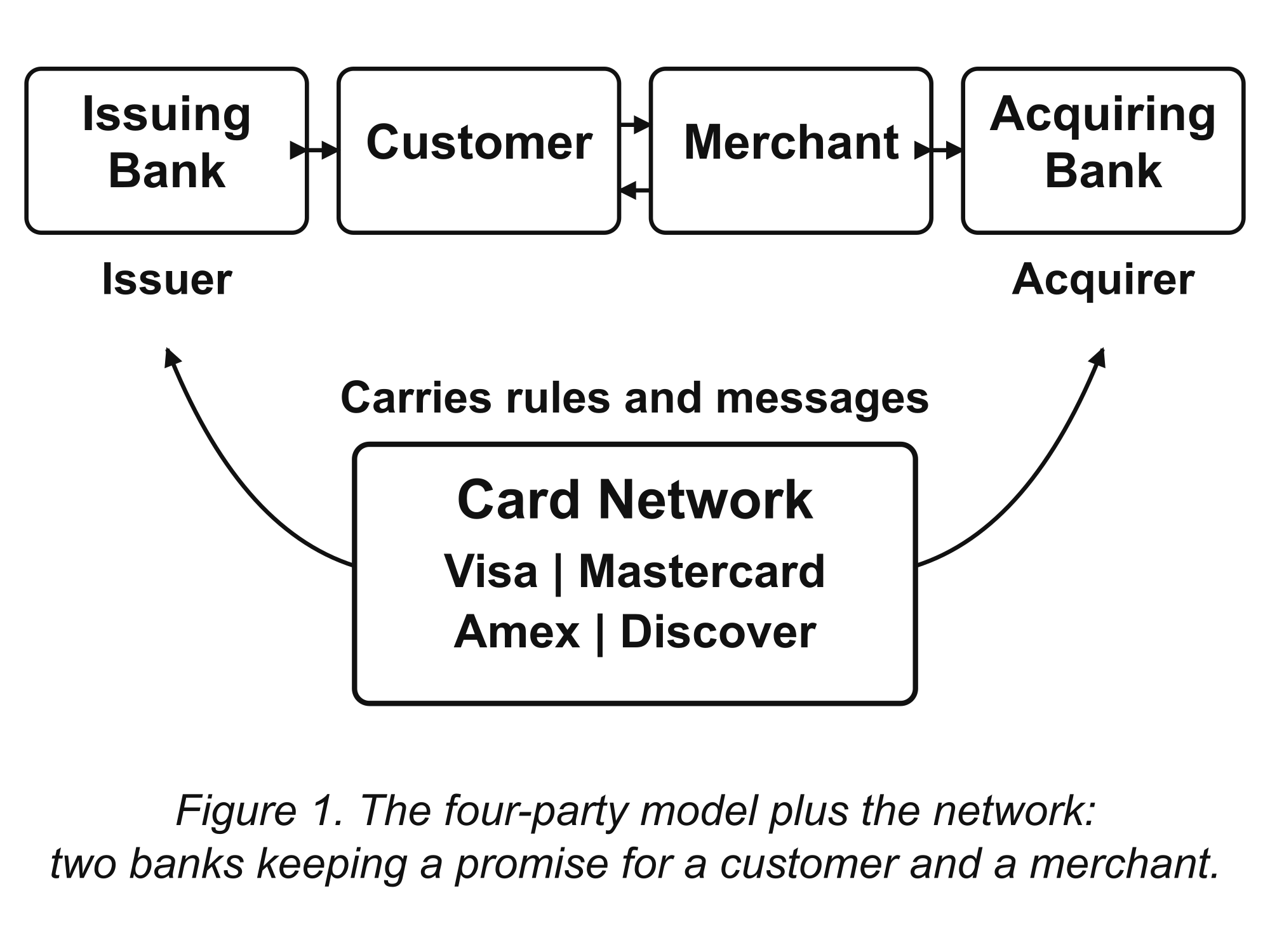
Figure 01 The 5 Rules, Rule 3
The Four-Party Model Plus the Network
Two banks keep a promise for a customer and a merchant while the card network carries rules and messages.
Free · nine diagrams · full size
How a card payment really works, from the four parties to an AI agent buying printer paper. Use them in team training, classes and presentations. Please keep the credit line with them.
Credit line: From US Payment Handbook, Third Edition, by Ben Love and Holly Love. uspaybook.com
Figure 01 The 5 Rules, Rule 3
Two banks keep a promise for a customer and a merchant while the card network carries rules and messages.
Figure 02 Part I
A customer and a merchant exchange goods or services for funds, even though neither has a reason to trust the other.
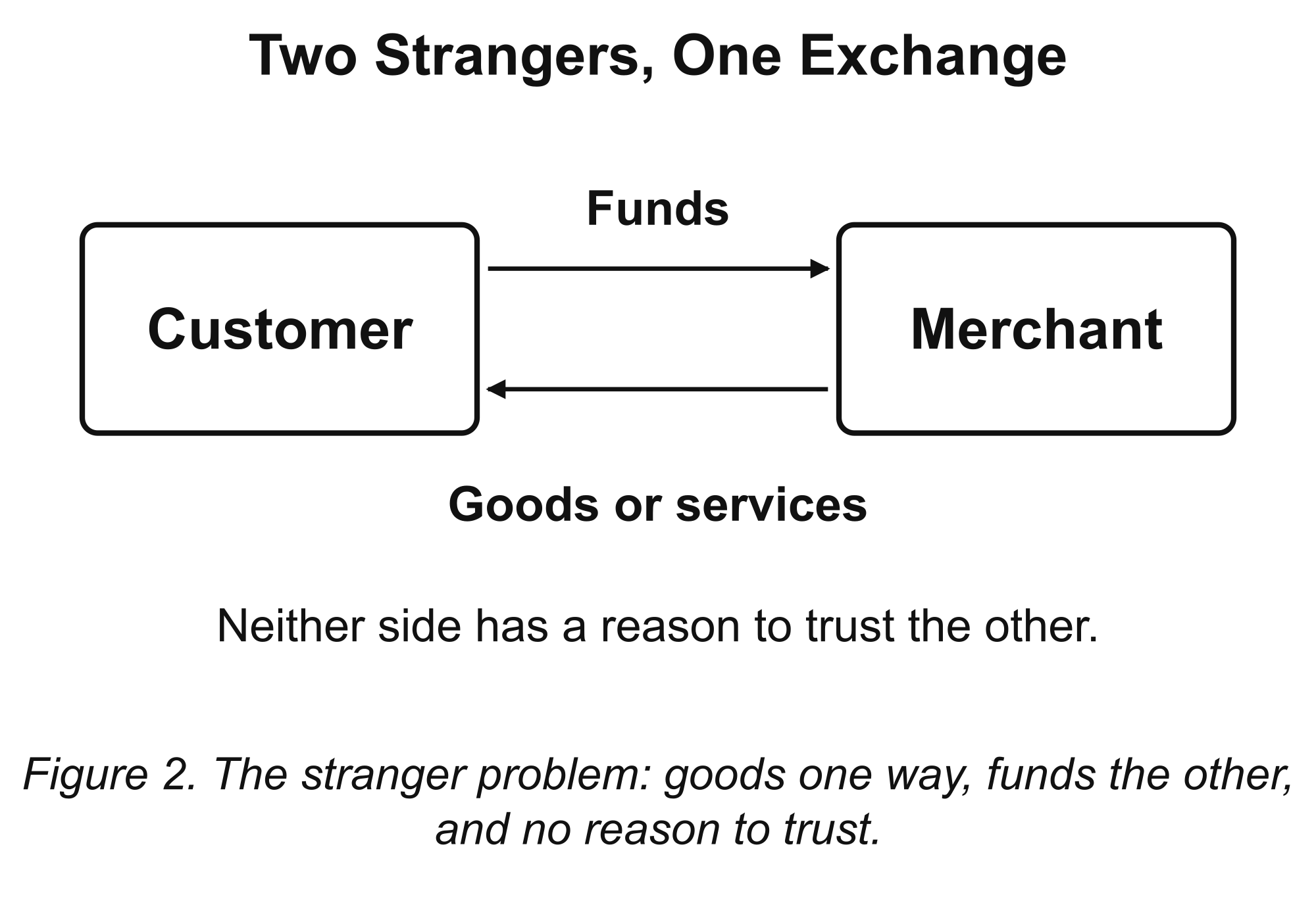
Figure 03 Part II
A payment terminal sends an authorization request through the processor and card network to the issuer, then receives an approval or decline.
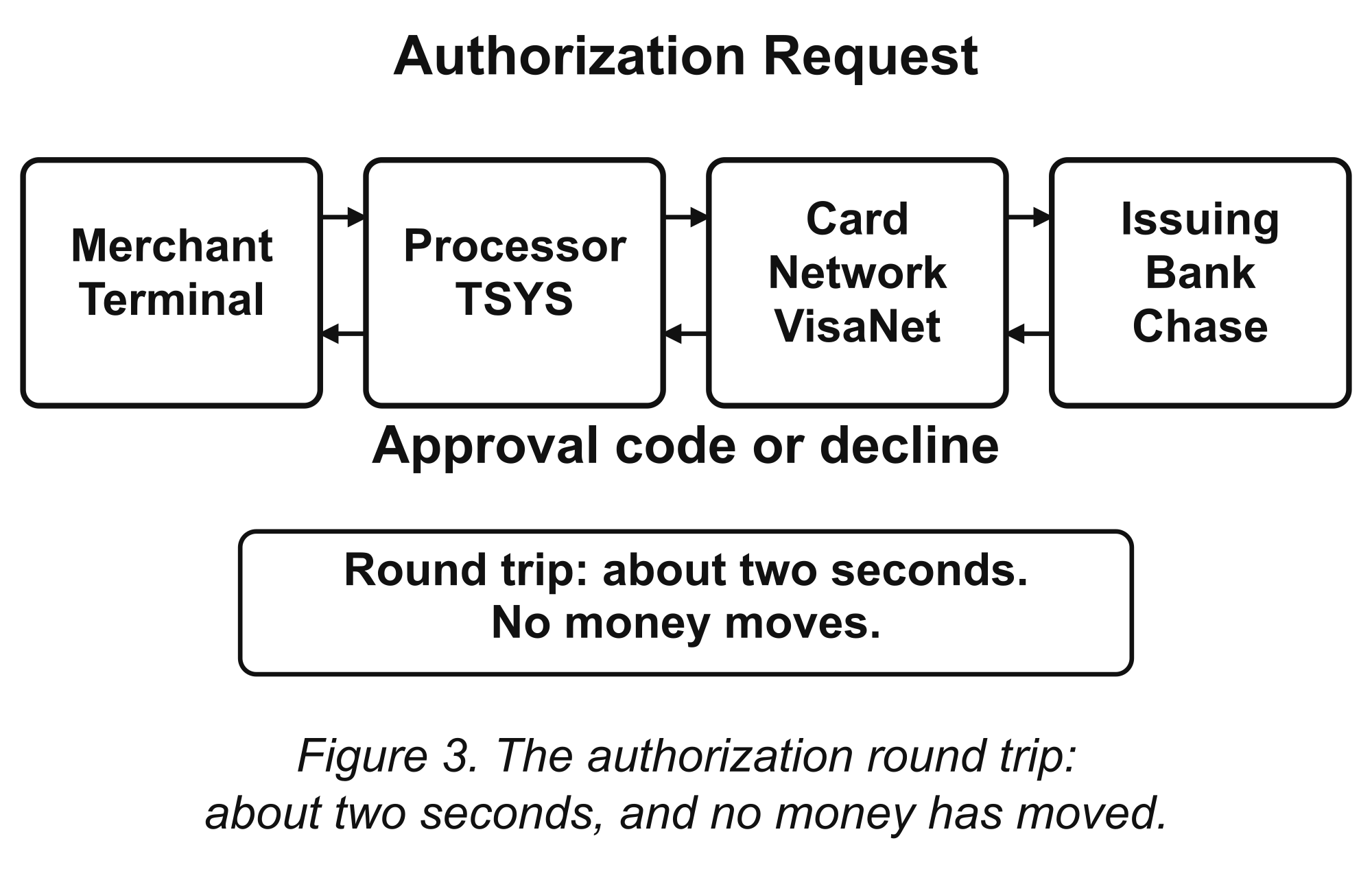
Figure 04 Part II
Authorization, clearing, interbank settlement, and merchant funding are separate steps that happen on different schedules.
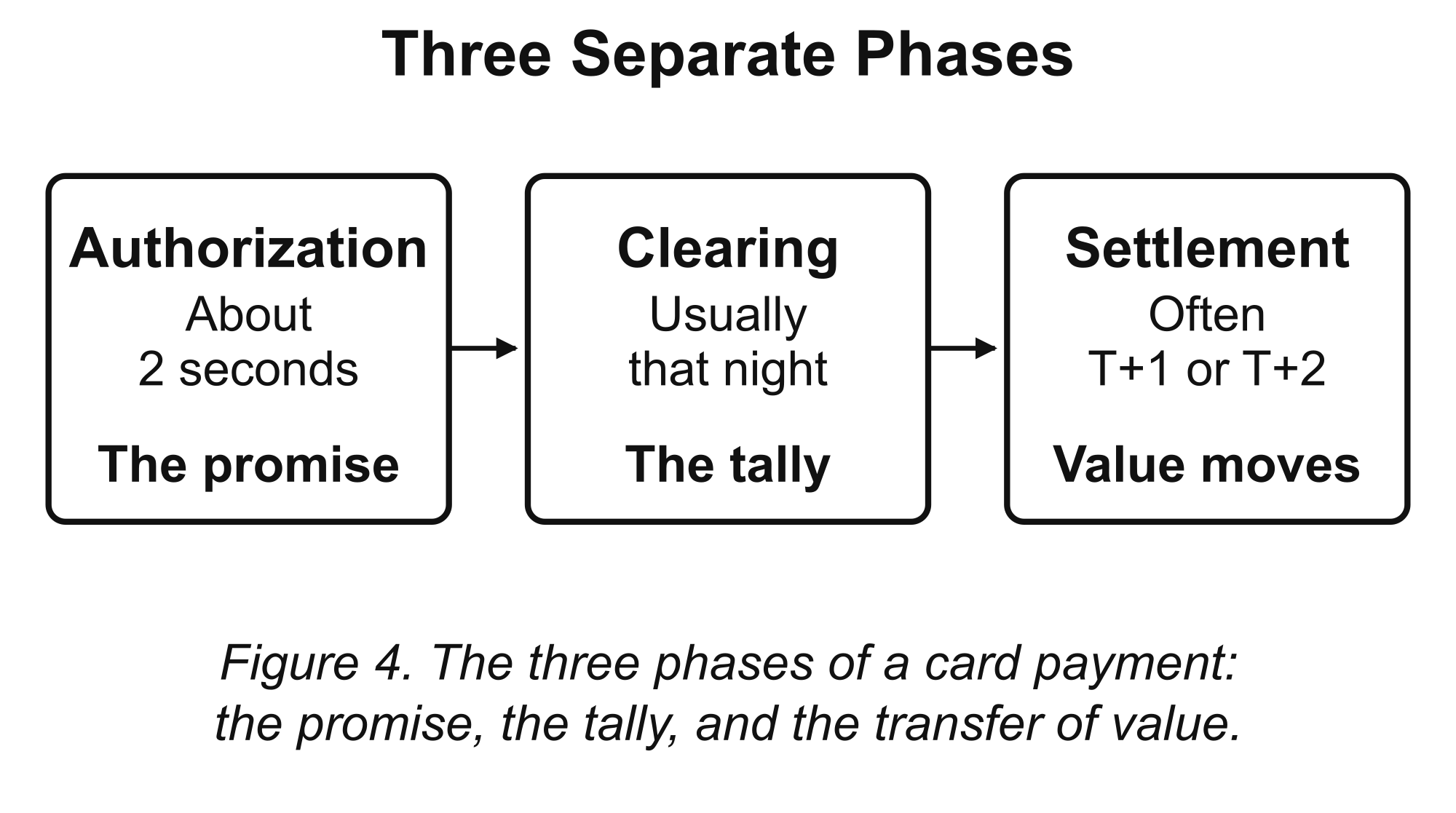
Figure 05 Part III
An illustrative one-hundred-dollar sale shows interchange, network fees, and acquiring-side markup. Actual pricing varies.
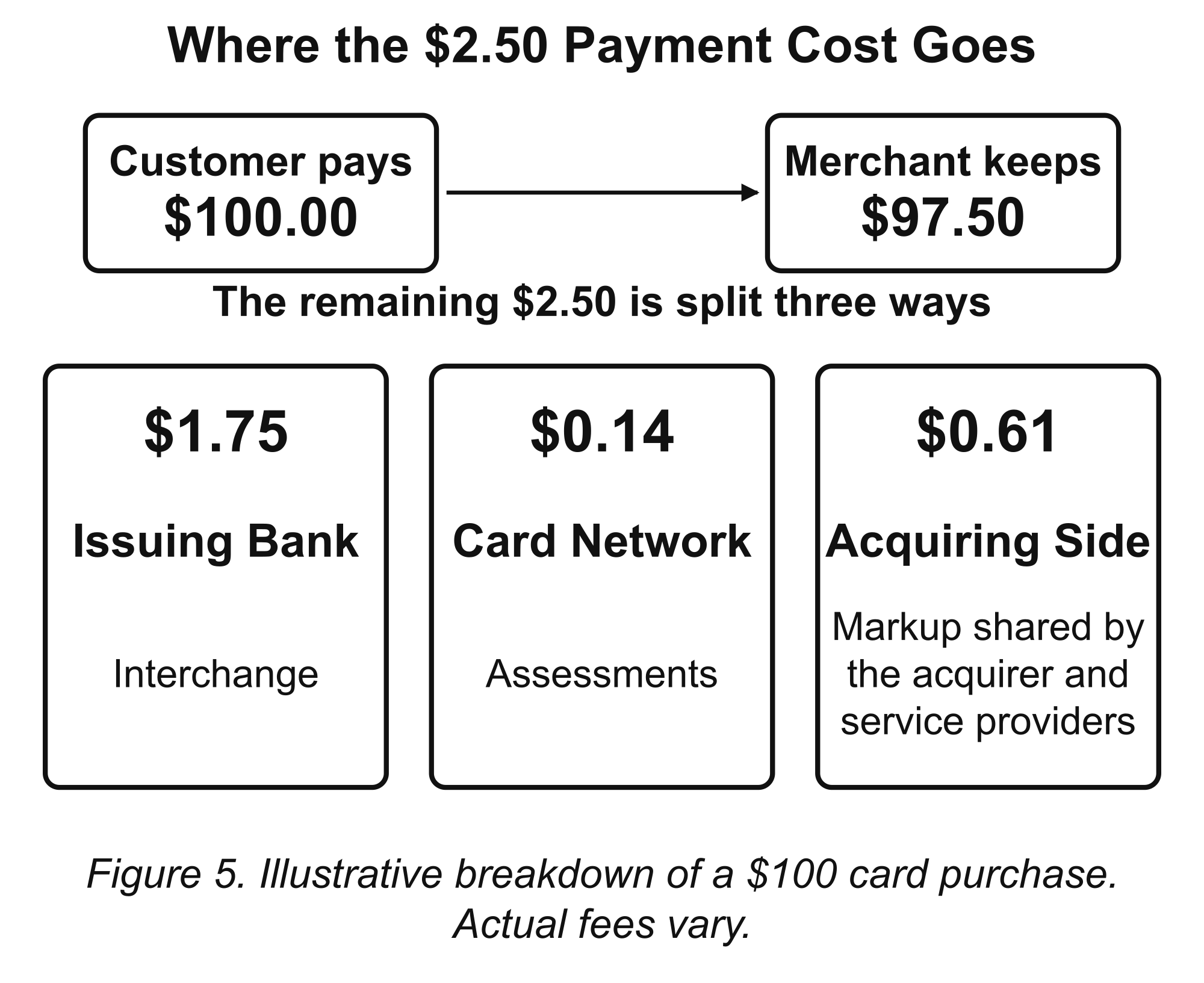
Figure 06 Part IV
A void cancels before capture, a refund sends value back after capture, and a chargeback follows a dispute process.
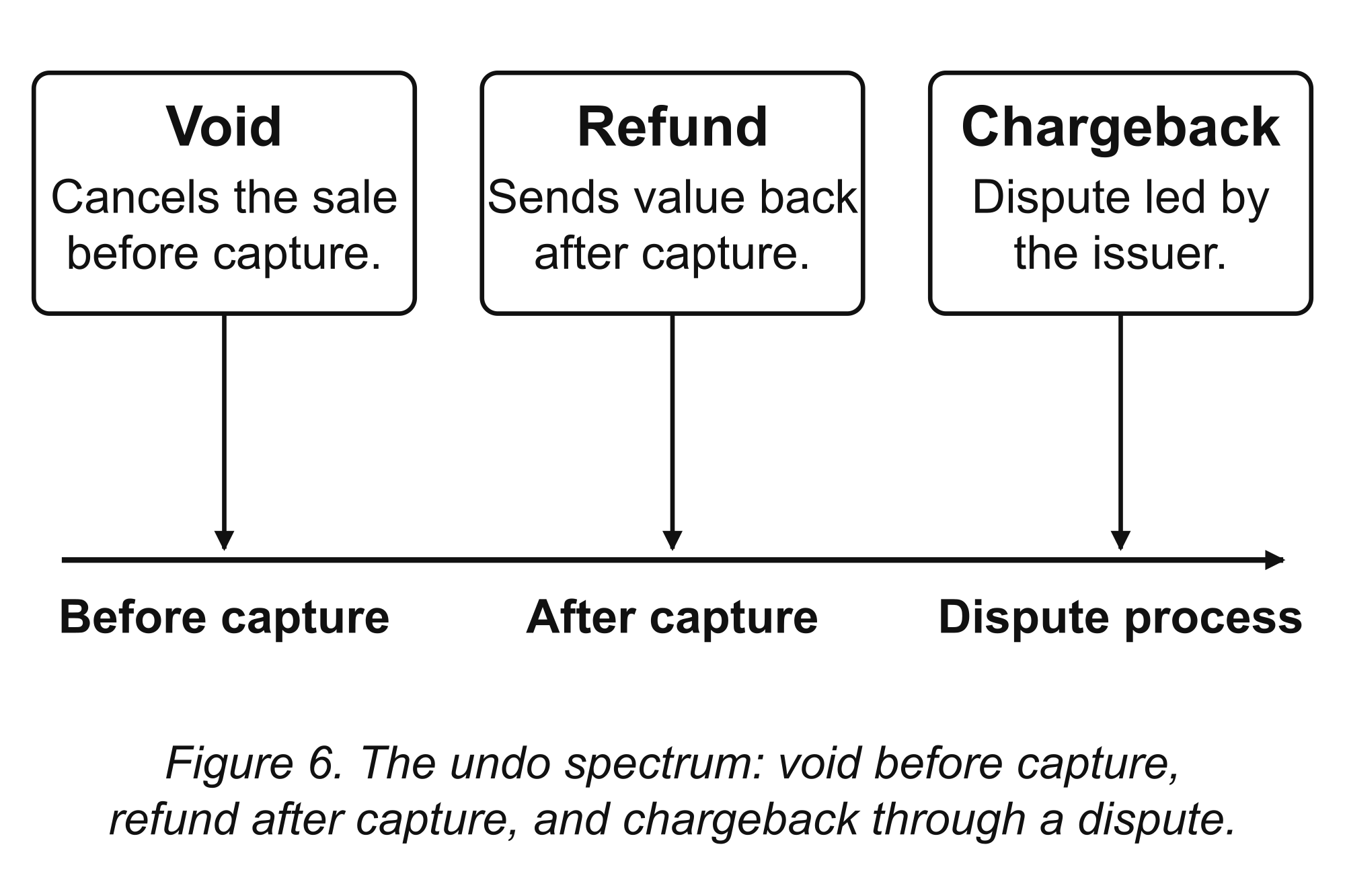
Figure 07 Part V
Wallets, peer-to-peer apps, QR codes, installment credit, and crypto can present new interfaces while using different rails underneath.
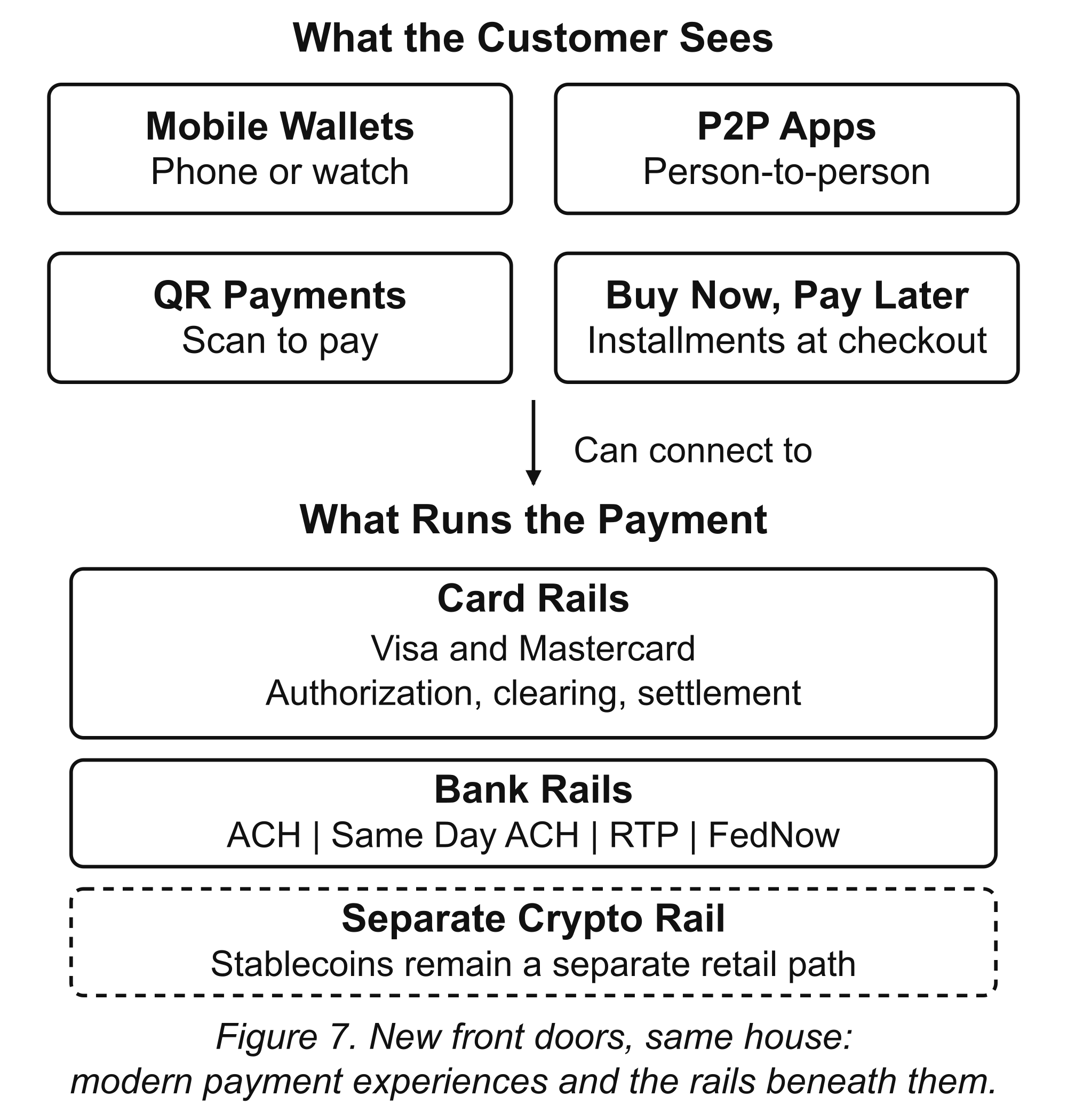
Figure 08 Part VII
Standard ACH, Same Day ACH, RTP, and FedNow differ in operator, speed, schedule, and recovery procedures.
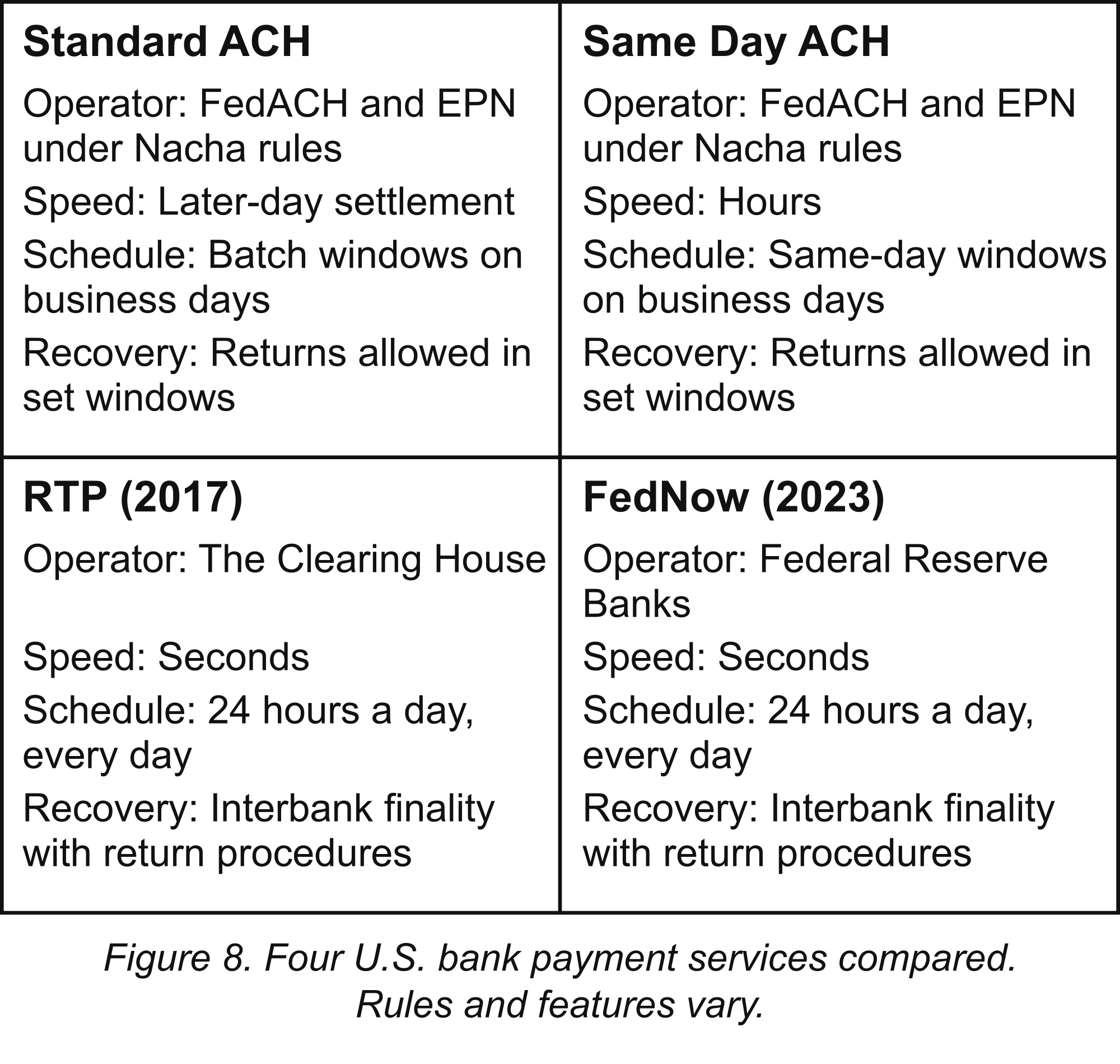
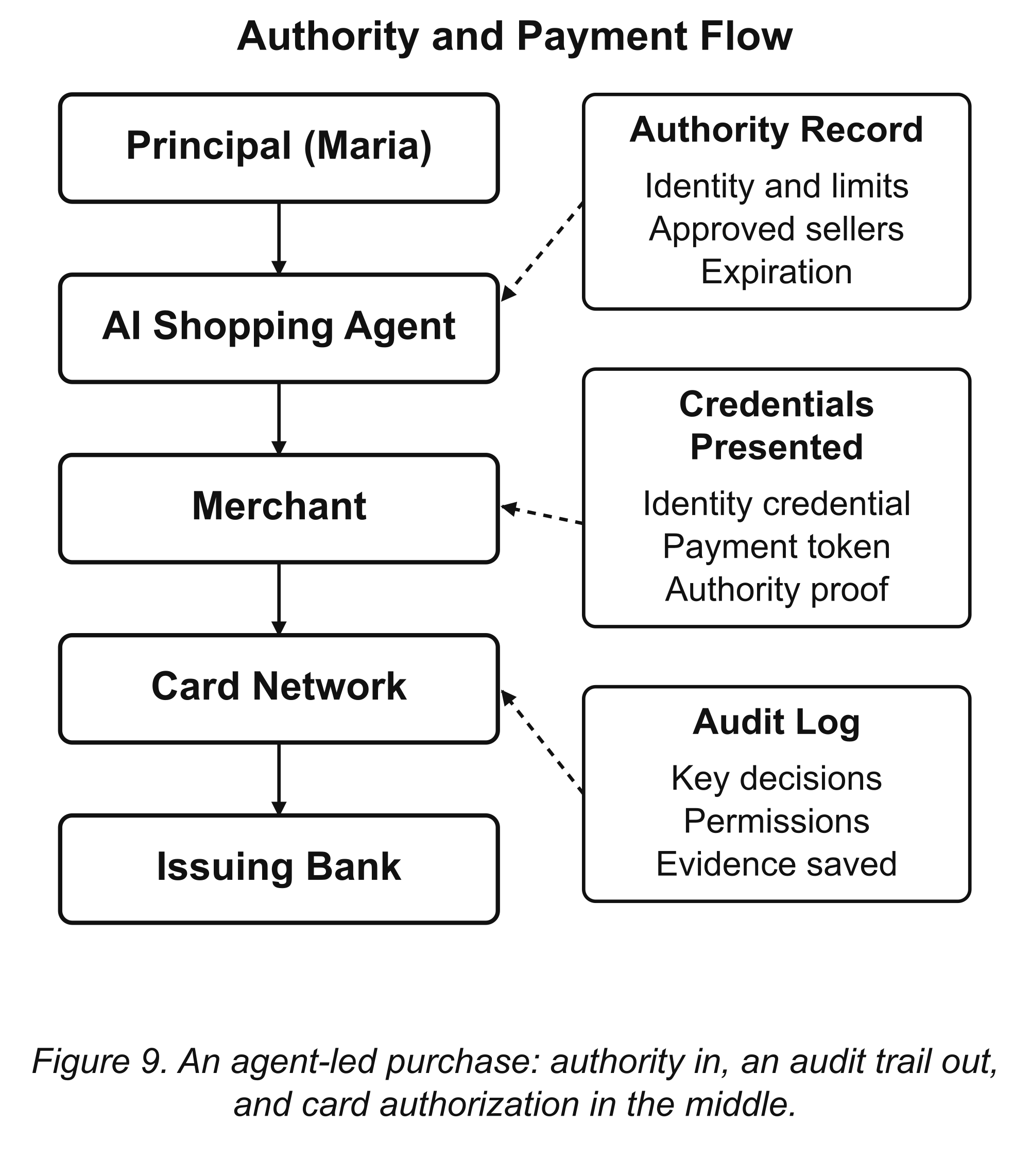
Figure 09 Part VIII
An AI agent needs clear authority, a payment credential, and an audit trail while the card authorization still follows the payment network.
The full story
One hour, one $100 coffee, and every party who touches it. Paperback, hardcover, Kindle and audiobook.
Get it on AmazonPrefer to listen? Get the audiobook on Audible ↗